
Delhi EV Policy 2026: Complete Guide to Subsidy, Registration, Road Tax & Compliance
A practical guide to EV subsidies, tax and registration benefits, scrappage incentives, new registration rules and compliance requirements in Delhi.
The Delhi Electric Vehicle (EV) Policy 2026 was notified on 30 June 2026 and came into effect on 1 July 2026. It will operate until 31 March 2030. The policy combines EV purchase incentives with road-tax and registration-fee exemptions, scrappage benefits, charging infrastructure and battery-waste compliance.
For EV buyers and businesses, the key questions are simple: What benefits are available, who is eligible, when do the new registration rules apply, and what compliance requirements should businesses plan for?
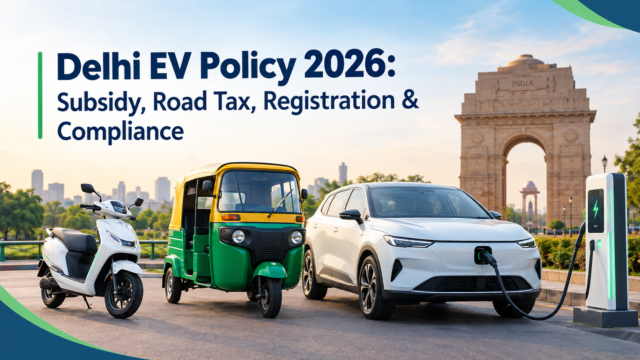
1. Delhi EV Subsidy 2026: Purchase Incentives
The policy provides category-specific incentives rather than a blanket EV subsidy in Delhi. Eligible electric two-wheelers with an ex-factory price up to ₹2.25 lakh can receive ₹10,000 per kWh, capped at ₹30,000 in the first year. The incentive reduces to ₹6,600 per kWh, capped at ₹20,000 in the second year, and ₹3,300 per kWh, capped at ₹10,000 in the third year.
2. Electric Three-Wheeler & Goods Vehicle Incentives
Under the Delhi EV Policy 2026, eligible electric L5M auto-rickshaws receive ₹50,000 in the first year, ₹40,000 in the second and ₹30,000 in the third. Eligible electric N1 goods carriers can also receive incentives under the policy. These benefits are relevant to commercial operators planning fleet replacement and should be considered alongside registration and permit requirements.
3. Delhi EV Road Tax & Registration Fee Exemption
A major benefit under the Delhi EV Policy 2026 is a 100% exemption from road tax and registration fees for eligible electric vehicles registered in Delhi during the policy period. Electric cars priced up to ₹30 lakh are covered by the exemption until 31 March 2030. Electric cars above ₹30 lakh do not receive this exemption under the policy.
4. Delhi EV Scrappage Incentive 2026
The Delhi EV Policy 2026 links vehicle scrappage with EV adoption by providing incentives for eligible old vehicles replaced with specified EVs. For an eligible electric car, the scrappage incentive can be ₹1 lakh, subject to the policy’s conditions and applicant limits. The benefit is linked to the Certificate of Deposit issued by an authorised Registered Vehicle Scrapping Facility.
5. Delhi EV Registration Rules 2026: Important Deadlines
The policy also moves from incentives towards phased restrictions on new registration. From 1 January 2027, new L5 three-wheelers registered in Delhi must be electric. From 1 April 2028, new two-wheelers registered in Delhi must be electric. These dates matter for dealers, fleet operators, delivery businesses and anyone planning future vehicle procurement.
6. EV Charging Infrastructure & Battery Compliance
Delhi Transco Limited (DTL) is responsible for planning, deployment and monitoring of public EV charging and battery-swapping infrastructure. The policy also requires applicable OEMs and other obligated entities to comply with the Battery Waste Management Rules, 2022, including Extended Producer Responsibility (EPR), reporting and environmentally sound management of waste batteries. Businesses involved in EV manufacturing, charging infrastructure and battery management should assess their applicable regulatory and environmental compliance obligations.
7. Delhi EV Policy 2026: What Businesses Should Review
For businesses, the Delhi EV Policy 2026 is also a contracts and compliance issue. EV manufacturers, fleet operators, charging businesses and other EV ecosystem participants should review procurement contracts, fleet policies, vendor arrangements, charging agreements, EPR processes and regulatory approvals. Early legal and compliance review can help businesses identify potential gaps as the phased requirements take effect.
Delhi EV Policy 2026: Important Dates
|
DATE |
WHAT HAPPENS |
|
30 JUNE 2026 |
Policy notified |
|
1 JULY 2026 |
Policy comes into effect |
|
1 JANUARY 2027 |
New L5 three-Wheelers registered in Delhi must be electric. |
|
1 APRIL 2028 |
New two-Wheelers registered in Delhi must be electric. |
|
31 MARCH 2030 |
Policy period ends. |
Frequently Asked Questions
1. What is the Delhi EV Policy 2026?
The Delhi EV Policy 2026 is Delhi’s current electric vehicle policy, effective from 1 July 2026 to 31 March 2030. It covers EV purchase incentives, road tax and registration benefits, vehicle scrappage, charging infrastructure and battery compliance.
2. How much is the EV subsidy in Delhi in 2026?
Under the Delhi EV Policy 2026, eligible electric two-wheelers can receive an incentive of ₹10,000 per kWh, capped at ₹30,000 in the first year. Incentive rates and limits vary depending on the vehicle category.
3. Is there a road tax exemption for EVs in Delhi in 2026?
Yes. Eligible electric vehicles registered in Delhi receive a 100% exemption from road tax and registration fees, subject to the conditions of the policy. Electric cars priced above ₹30 lakh are excluded from this exemption.
4. When do the new EV registration rules start in Delhi?
The new registration requirements are being introduced in phases. New L5 three-wheelers must be electric from 1 January 2027, while new two-wheelers registered in Delhi must be electric from 1 April 2028.
5. Does the Delhi EV Policy 2026 cover EV battery recycling and EPR compliance?
Yes. Applicable EV manufacturers and other obligated entities must comply with the Battery Waste Management Rules, 2022, including Extended Producer Responsibility (EPR), reporting requirements and environmentally sound management of waste batteries.
Key Takeaway
The Delhi EV Policy 2026 is more than an EV subsidy scheme. It combines financial incentives with registration changes, charging infrastructure and environmental compliance. For vehicle owners and businesses, understanding the applicable benefit, deadline and documentation is now an important part of planning the shift to electric mobility.


